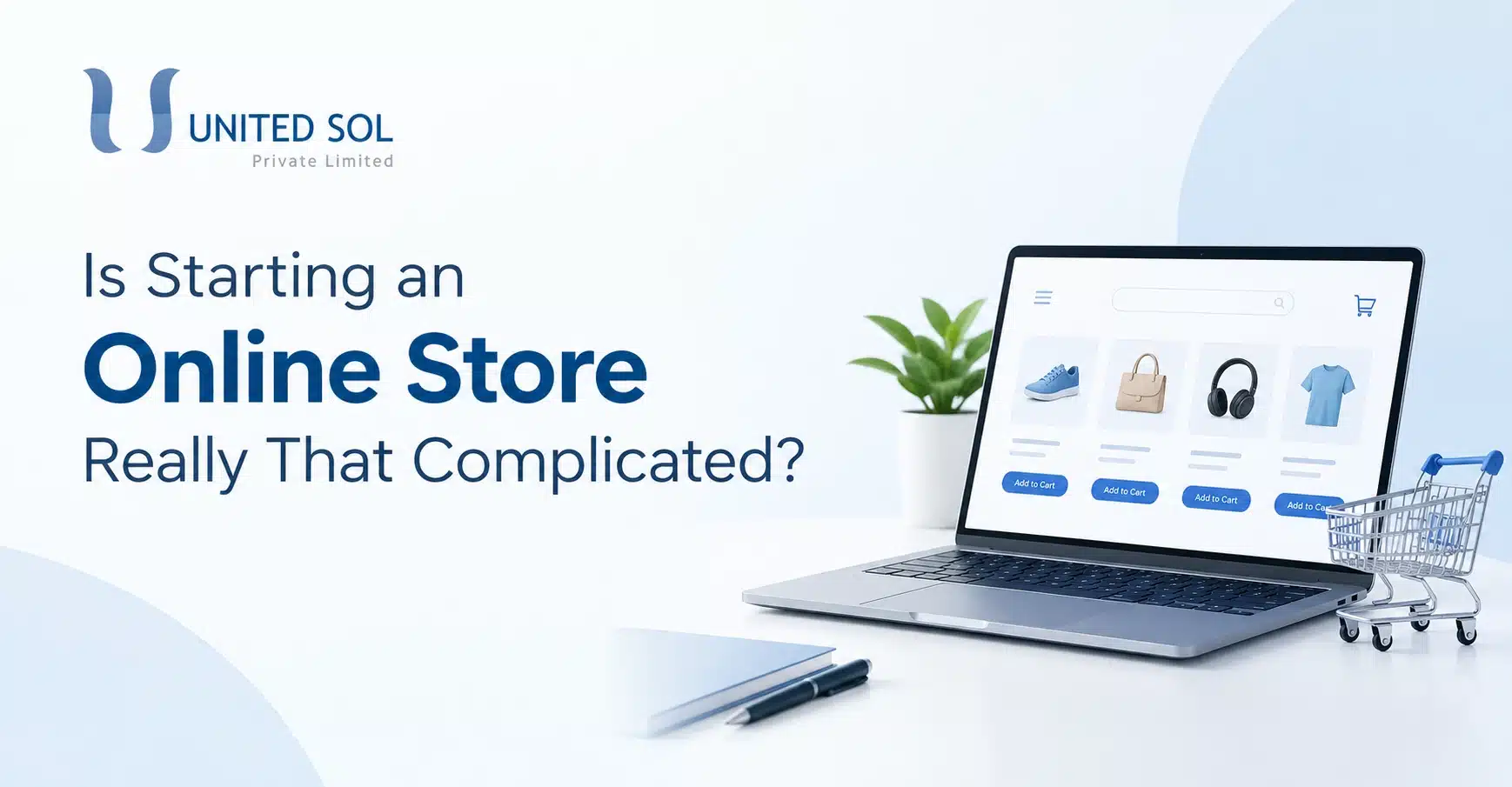
Starting an online store can seem more complicated than it needs to be. There are platforms to compare, domains to connect, payment methods to configure, products to upload, shipping to arrange, and countless other decisions that can make a simple business idea feel like a technical project.
But you do not need to build everything from scratch to start selling online. The goal of your first setup should be simple: create a professional store, make it easy for customers to buy, and put the basic systems in place to manage orders and customers.
Start With What Your Business Actually Needs
Before choosing a platform or paying for a long list of tools, think about what your store needs to do.
At the beginning, most businesses need a few essential things:
- A professional online storefront.
- Product and inventory management.
- Reliable payment options.
- Order management.
- Delivery or shipping arrangements.
- Customer communication.
- A custom domain.
- Basic analytics.
You can always add more advanced features as your business grows.
Starting with everything at once can create unnecessary costs and make your store harder to manage. A better approach is to establish the core selling process first and add tools when they solve a real business need.
Yes, if you are having trouble picking up the essentials for your e-commerce store, the expert team at United Sol is always available to help you get started.
Choose A Store Setup That Matches Your Technical Skills
One of the biggest decisions is how your store will be built.
Businesses with complex requirements may need custom ecommerce development. Larger operations may need advanced integrations with ERP, CRM, inventory, or other business systems. But a new business with a relatively straightforward catalog may not need that level of development on day one.
A ready-to-use ecommerce platform can handle much of the technical infrastructure for you. This allows business owners to focus on products, customers, marketing, and sales instead of spending their first weeks managing servers, integrations, and code.
For businesses that want a straightforward way to get started, platforms such as Storefly bring the storefront, payments, order management, delivery tools, and customer communication features into one setup.
The right choice depends on the complexity of the business. The important thing is to avoid paying for technical complexity that your store does not yet require.
Get Your Domain Early
Your domain is part of your brand, so it is worth choosing it carefully.
Try to keep it:
- Easy to remember.
- Easy to spell.
- Relevant to your business.
- Consistent with your brand name.
A professional domain also makes your store feel more established than relying indefinitely on a temporary store address.
You do not necessarily need to delay your launch while waiting for every branding detail to be perfect. You can start building your store and connect your custom domain when you are ready.
Keep Your Product Catalog Simple and Complete
Your products are the heart of your store, so focus on making them easy to understand.
Each product should have a clear name, useful description, good-quality images, price, available variations, stock information, and relevant delivery details.
Avoid filling product pages with information that does not help customers make a decision.
At the same time, do not leave out important details simply because you want the page to look clean. A customer who cannot find the size, material, dimensions, ingredients, or delivery information they need may leave the store before buying.
A well-organized product catalog also creates a strong foundation for future ecommerce automation and AI tools. Better product data means better product recommendations, content generation, search results, translations, and customer support.
Set Up Payments Before You Promote the Store
A common mistake is to focus heavily on the storefront while leaving payment configuration until the end.
Customers should have a clear and convenient way to pay once they arrive at checkout.
Depending on your market and customer base, you may need card payments, bank transfers, digital wallets, or Cash on Delivery. Make sure the methods you offer are actually working before you start sending traffic to your store.
Place test orders yourself. Check the complete process from product selection to payment confirmation and order creation.
A few minutes of testing can prevent a customer from encountering a broken checkout after your marketing campaign has already started.
Make Delivery Part of the Setup
Selling a product is only one part of ecommerce. You also need a practical way to get it to the customer.
Decide in advance:
- Which delivery services you will use.
- Where you will deliver.
- How shipping charges will be calculated.
- How customers will receive tracking information.
- How returns and failed deliveries will be handled.
For businesses selling in Pakistan, this can be particularly important because customers may expect options such as Cash on Delivery and familiar local courier services.
For example, a platform designed around local ecommerce needs can bring several of these tasks together instead of requiring separate tools for each one.
Storefly combines Cash on Delivery with OTP based order verification, local payment options such as JazzCash, EasyPaisa and Raast, and integrations with courier services including TCS, Leopards and PostEx.
It also connects order updates and customer communication through WhatsApp, giving smaller businesses a more manageable way to handle the operational side of selling online.
Bringing these processes closer to your store management system can save time. Instead of switching between multiple dashboards for every order, an integrated setup can keep more of the workflow in one place.
Do Not Ignore Customer Communication
Customers will have questions.
They may ask about product availability, delivery times, payment options, sizes, returns, or the status of an order.
You do not need a large support team to handle these questions from day one. Start with clear information on your website and provide an easy way for customers to contact you.
As order volume increases, automation can take over repetitive questions and notifications. Chatbots can answer common queries, provide product information, and help customers find what they need. Automated messages can also keep customers informed about their orders.
This is where an ecommerce platform like Storefly and AI tools can complement each other. Your store provides the product and order data, while AI can help turn that information into faster customer interactions.
Automate Repetitive Work Gradually
Automation is useful, but it does not mean you need to automate everything before launch.
Start with tasks that happen repeatedly and follow predictable processes.
For example:
Before an order:
Answer common product questions and help customers find relevant products.
During an order:
Send confirmation and payment notifications.
After an order:
Send shipping updates, tracking information, and delivery notifications.
For your store team:
Automate repetitive product content, translations, customer responses, or other routine tasks as your needs grow.
This approach keeps automation practical. Instead of adding technology simply because it is available, you use it where it can remove real work from your day.
Keep Your Technology Stack Manageable
It is easy to end up with a collection of separate tools.
One service handles payments. Another handles email. A third manages customer support. Another handles shipping. Then you add an AI tool, an analytics platform, a marketing system, and several plugins to connect everything.
Each tool might be useful on its own, but managing too many disconnected systems creates its own workload.
Whenever possible, look for tools that already integrate with the systems you use. Fewer disconnected tools can mean fewer accounts, fewer integrations to maintain, and fewer places to look when something goes wrong.
This does not mean every business should use one platform for everything. Larger ecommerce operations often have good reasons to use specialized systems. The point is to choose technology based on actual requirements rather than adding tools simply because they are available.
Launch Before Everything Is Perfect
Another way businesses overcomplicate ecommerce is by waiting too long to launch.
Your first store does not need to have every possible feature. It needs to provide a good buying experience.
Start with a focused product range if necessary. Make sure the checkout works. Test payments and delivery. Add your policies. Connect your domain. Then launch.
Once real customers start interacting with your store, you will have better information about what needs improvement.
Maybe customers repeatedly ask the same question. Maybe they struggle to find certain products. Maybe your checkout needs another payment option. Maybe order tracking generates too many support messages.
These real-world insights are much more useful than trying to predict every possible problem before launch.
Build for the Next Stage, Not Every Possible Stage
Keeping your setup simple does not mean ignoring future growth.
Choose a platform that can support the next stage of your business without forcing you to build features you do not currently need.
A small online store may begin with a few dozen products and a simple checkout. As sales grow, it may need better inventory management, additional payment options, courier integrations, customer segmentation, analytics, marketing automation, or AI-powered customer support.
Your technology should be able to grow with those requirements.
The best starting point is therefore not necessarily the platform with the longest feature list. It is the setup that gives you the essential tools today while leaving room to add more when your business actually needs them.
A Simpler Store Is Easier to Grow
Starting an online store does not have to mean assembling dozens of tools before you can accept your first order.
Begin with the fundamentals: a professional storefront, organized products, working payments, reliable delivery, customer communication, and a manageable order process.
Then automate repetitive tasks as they appear and add more advanced technology when it solves a genuine problem.
The goal is not to build the most complicated ecommerce system possible. It is to create a store that works well for your customers and remains manageable for the people running it.
When the technical setup stays simple, you can spend more of your time doing what actually grows the business: improving your products, serving customers, and generating sales.